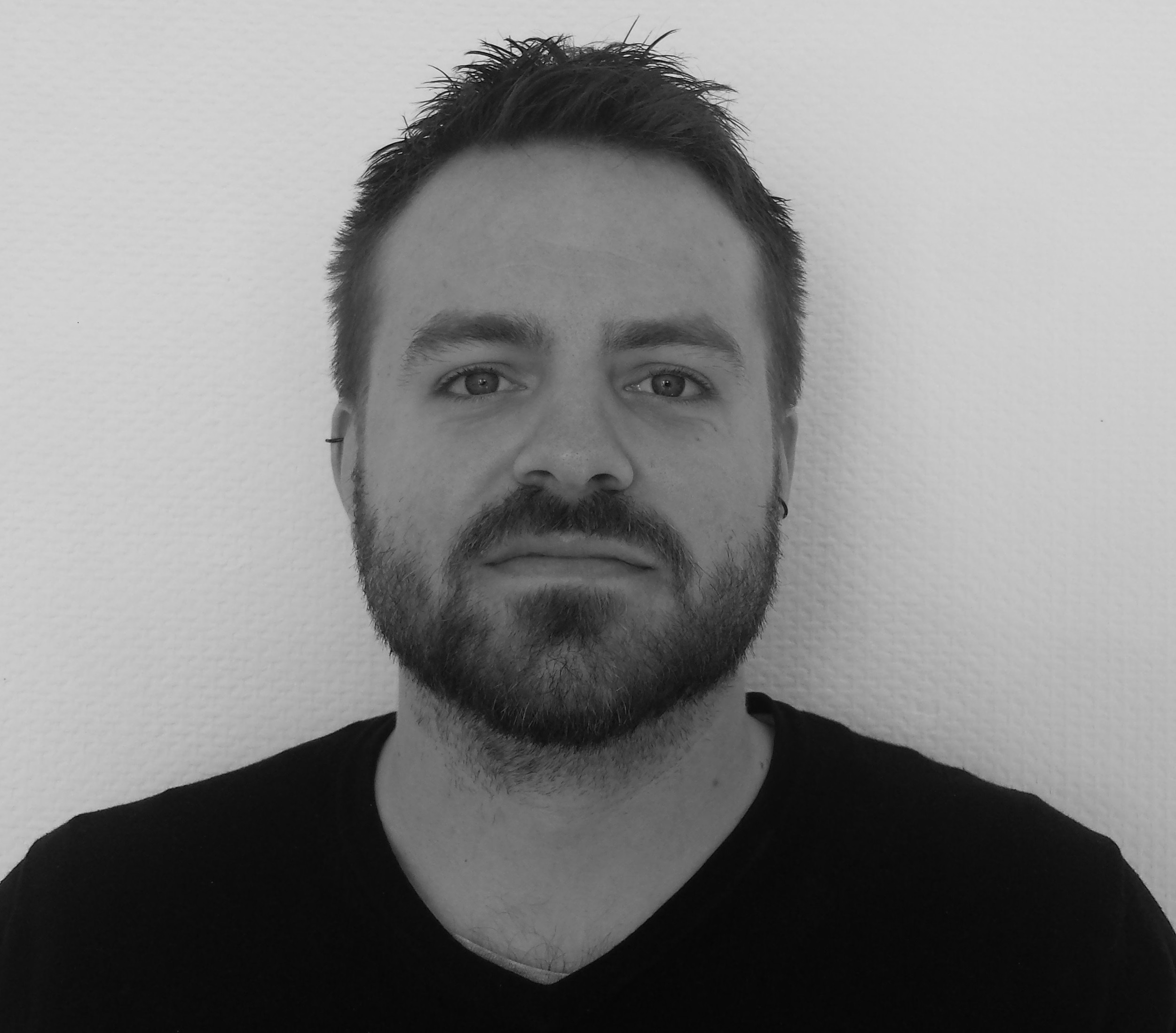
About Stéphane

Climate Pipeline Partner · Senior Data Engineer for Parametric Insurance

Stéphane Karasiewicz

Bridging two worlds

I sit at an unusual intersection: 15+ years of satellite remote sensing for climate research, then a deliberate pivot into production data engineering for parametric insurance.

That trajectory is the entire reason Skaraz Data exists. Most teams building climate scoring pipelines have someone who understands the climate data and someone who can ship production code, but rarely the same person. I spent a decade learning what climate datasets really say and don't say, and the last few years learning what it takes to ship them reliably at 3am on a Sunday.

That's what I bring to parametric insurers: a translator between the two worlds, with hands deep in both.

How I got here

Marine ecology PhD, Université de Lille (2014-2017).

Phytoplankton dynamics under global change. Sounds niche, but the underlying skills are exactly what climate scoring needs: multivariate statistics on noisy satellite data, calibration across geographies, time-series with seasonal drift, and a stubborn discipline about validating against ground truth.

IFREMER, Marine Remote Sensing Researcher (2018-2023).

5+ cumulative years working with MODIS, Sentinel-2/3, reanalysis products, and in-situ networks across the French coast and beyond. I published 6 peer-reviewed papers, shipped 2 CRAN R packages still used today (BDAlgo, subniche, 8,000+ cumulative downloads), and mentored 6 researchers on reproducible workflows. I also spent years staring at the same kind of climate data that parametric insurers use today, just for different downstream purposes.

The pivot (2023).

Two things happened in parallel. First, I realized I wanted to ship things people actually used more than I wanted to publish the next paper. The papers were good, but writing them was no longer the work I wanted to do daily. Second, I knew my mix of climate science background and code skills was useful to industry, I just didn't know which one. I bet on freelance, and within months I joined Raincoat. That's where I discovered parametric insurance.

Raincoat LLC (Feb 2024, Jan 2026).

I joined as a Senior Data Scientist on a freelance contract with a parametric insurtech in San Juan, Puerto Rico. Over nearly 2 years, I operated end-to-end pipelines for 4 climate perils across 10+ countries in LatAm, SEA, and Africa. Drought and precipitation already existed when I joined and I maintained them through dataset updates and geographic extensions. Water balance I built from scratch to production. Heat stress I built to a ready-to-deploy state, but it did not reach production during my contract. I ran the production pipelines solo as dev/ops at the end of the contract, and delivered a modular architecture roadmap as a scoped technical handoff to the team.

Skaraz Data (Sep 2023, Present). Climate Pipeline Partner (May 2026, Present).

Skaraz Data is my freelance practice, registered as auto-entrepreneur in France since September 2023. The Climate Pipeline Partner positioning crystallized in May 2026, after nearly 2 years embedded at Raincoat showed me where parametric insurers actually struggle. What I do today: I help parametric insurers ship climate scoring pipelines in 8 to 16 weeks. Three tiers (Discovery, Partner, Retainer), one Code Quality Guarantee, and a small enough operation that I can stay close to the technical work, which is exactly the point.

What I believe

Three convictions that guide how I work:

Climate science without DevOps is research. Data engineering without climate science is bricolage.

The interesting work happens in the overlap. Most teams underestimate how much both sides need to bend toward each other for a real production pipeline to exist.

A pipeline that wakes the team up at 3am is a failure, however accurate the model.

Reliability eats accuracy for breakfast. A model that's 95% correct and runs every night without intervention beats a model that's 99% correct and needs babysitting.

The expensive part isn't the model, it's the bridge between scientists and ops.

Climate scientists and DevOps engineers don't speak the same language. Until someone bridges them, every release becomes a game of broken telephone. That bridge is what I rent out.

Currently

Updated May 2026

  • Available: 2-3 new engagements per quarter
  • Working on: scaling the Skaraz Data climate risk REST API (multi-hazard, freemium model) covering precipitation, heat, drought, water balance, and clay shrink-swell for France
  • Side projects: RiseSlow (consumer habit tracker), a multi-strategy algorithmic trading bot system
  • Based in: Hauts-de-France · Remote worldwide

Let's talk

If you're running a parametric insurance product and your climate pipelines are slowing your roadmap down, the Climate Pipeline Discovery is the cleanest way to find out where the real gaps are. Two weeks, fixed price, written deliverable.